Scientists Study Climate Change Impact on Baffin Bay Sea Ice Formation
International research team aboard the CCGS Amundsen examines how warming temperatures affect Arctic sea ice and coastal ecosystems.
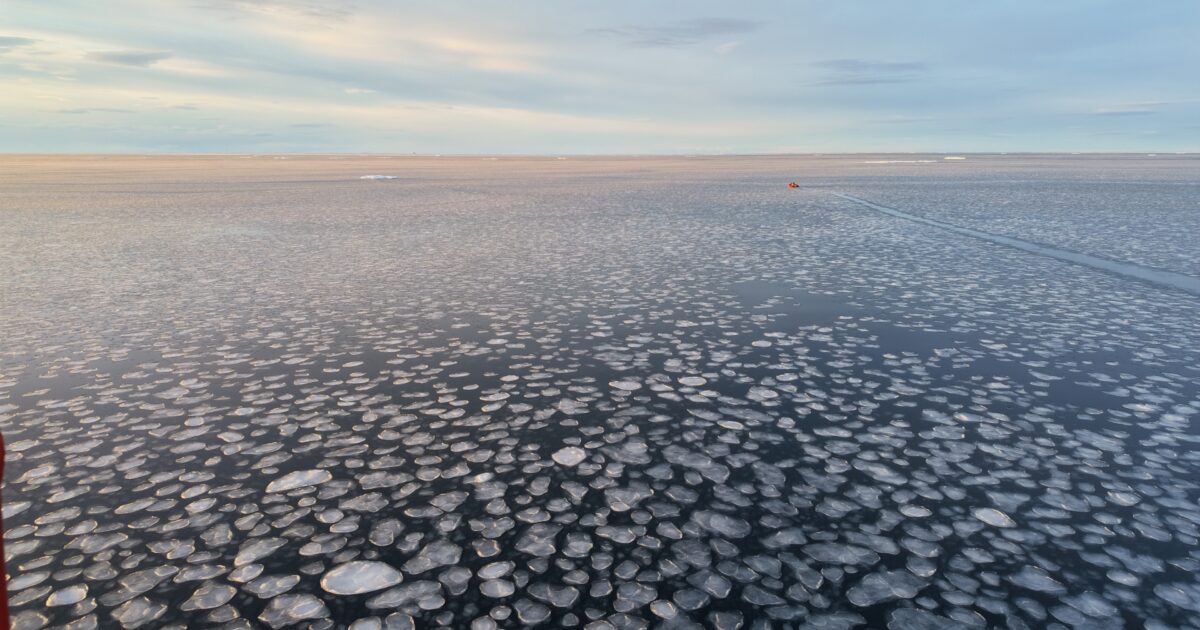
BAFFIN BAY — A team of 39 scientists from Canada, Switzerland, and France is nearing the end of a month-long research expedition aboard the Canadian Coast Guard icebreaker Amundsen, studying how climate change is altering sea ice formation in Baffin Bay. The Cascades Expedition, which departed Iqaluit on October 29, marks the first time researchers have been granted access to monitor late-season ice formation in the region, providing critical data on Arctic ecosystem changes.
Led by oceanographer Dany Dumont of the University of Quebec at Rimouski, the team has focused on tracking 'new ice'—recently formed seasonal ice that is more vulnerable to melting than multi-year ice. 'In a warmer climate, old ice will likely disappear, leaving only this fragile first-year ice,' Dumont explained from the research vessel, noting this shift has significant implications for marine ecosystems and northern coastal communities.
Using drones and small watercraft, researchers measured ocean surface temperatures, salinity levels, and wave formation patterns while collecting samples to analyze relationships between sea ice and marine life. The November expedition builds on earlier summer research along Greenland's west coast, where scientists studied glacier melt's impact on ocean conditions.
Project leader Jean-Éric Tremblay emphasized the importance of understanding freshwater influx from melting glaciers, which directly affects how sea ice hardens in Baffin Bay. The findings will improve climate models that help Indigenous and northern communities plan for shipping, hunting, and coastal safety as ice conditions become less predictable.
The international collaboration between Quebec's Institut nordique du Québec, the Swiss Polar Institute, and the French Polar Institute aims to provide governments and local residents with more accurate forecasts of Arctic ice cover—a critical tool for navigation and traditional harvesting activities in a rapidly changing North.
Reported with files from Nunatsiaq News.
 Mainstream News
Northern Cadet Programs Face Devastating Cuts Amid Federal Budget Constraints
Youth in Canada's Arctic territories lose critical programming as military suspends cadet activities, eliminating key opportunities for skill-building and community connection.
 Mainstream News
Historical Parkas Found in Thrift Store Headed Back to Nunavut
A B.C. man discovered four parkas made for the 1974 Arctic Winter Games in a Kamloops thrift store and is working to return them to Nunavut.
 Mainstream News
Yellowknife Seeks to Double Water Intake From Bay
The City of Yellowknife has applied to increase its water intake from Yellowknife Bay to meet growing demand and supplement its aging water system.
 Mainstream News
RCMP Spied on Indigenous Leaders Including Wab Kinew's Father in 1960s Surveillance Program
Newly uncovered documents reveal RCMP's 'Native extremism program' monitored residential school survivors turned activists, including Manitoba Premier Wab Kinew's father.